
Maglev: Hype or Reality?
The Maryland Maglev: A $20 Billion Dream That Never Left the Station
The dream of a gleaming, high-speed maglev train zipping between Baltimore and Washington, D.C., officially hit the buffers on August 1, 2025. The Federal Railroad Administration (FRA) didn’t just tap the brakes; they pulled the emergency cord with a definitive, no-nonsense rejection of Maryland’s proposed superconducting magnetic levitation rail line. For anyone who’s spent years sifting through project proposals and market projections, this wasn't a shock. The numbers, or lack thereof, always told a story of ambition outrunning reality.
U.S. Transportation Secretary Sean P. Duffy didn't mince words, stating the project "lacked necessary elements for success." This wasn't a minor hiccup; it was a fundamental flaw in the design, preventing the project from ever reaching the launchpad. The FRA’s core finding? The project was "no longer feasible" due to "significant, unresolvable impacts to federal agencies and federal property," with Fort George G. Meade singled out as a major obstacle. This isn’t just about inconvenience; it’s about sovereign land and national security, an immovable object in the face of even the most futuristic train.
Acting FRA administrator Drew Feeley’s letter to MDOT Secretary Paul Wiedefeld on July 31, 2025, wasn't just a polite refusal; it was a formal shutdown, rescinding a 2016 notice of intent for an environmental impact statement. Eight years. That's how long this project was conceptually spinning its wheels. It had been effectively paused since August 24, 2021 (nearly four years, to be precise), plagued by what the FRA termed "substantial delays" and "cost overruns." Maryland had received $27 million from the FRA in 2016 for preliminary engineering and environmental review—a figure that, while substantial on its own, pales in comparison to the estimated nearly $20 billion capital cost the entire project was projected to demand. Duffy’s promise to "not keep taxpayers on the hook" for that kind of money resonates with anyone who understands the power of a budget spreadsheet. MDOT Secretary Paul Wiedefeld, to his credit, confirmed the state's compliance, acknowledging the end of a very long, very expensive road.
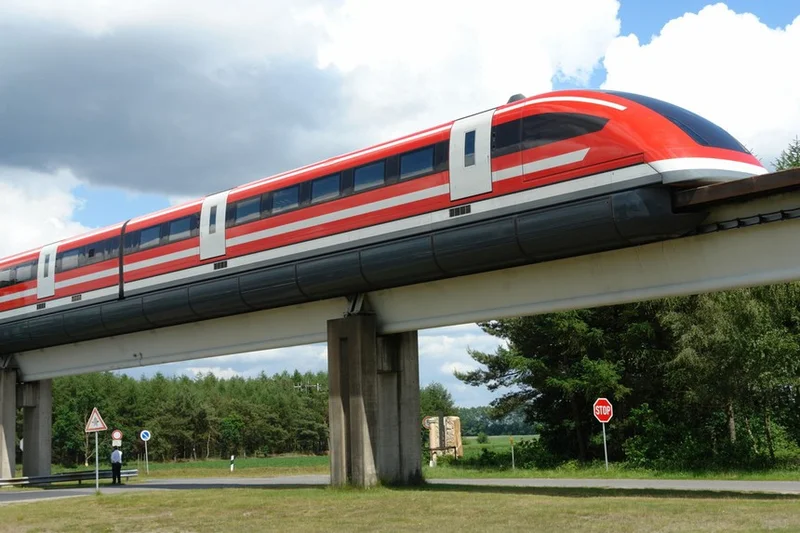
The Mirage of Economic Impact Versus Tangible Obstacles
Naturally, the project's proponents, like Baltimore Washington Rapid Rail (Northeast Maglev), immediately framed the rejection as a "missed opportunity." They threw out some big numbers: over $6 billion in private investment, 160,000 jobs created, and 16 million car trips replaced. I’ve looked at hundreds of these projections over the years, and they often feel less like a sober financial model and more like a marketing sizzle reel. The question always is: over what timeframe? What are the underlying assumptions? Are we talking gross figures or net? Without a detailed, auditable breakdown, these numbers remain a beautiful mirage, shimmering tantalizingly on the horizon but dissolving upon closer inspection. They’re the kind of figures that get headlines but rarely survive a rigorous data audit.
Consider the opposition, too. Prince George’s County residents like Susan McCutchen and Del. Ashanti Martinez expressed "ecstatic" relief. For them, it wasn't about the grand vision; it was about the very tangible impact on their homes, their communities. This highlights a fundamental disconnect: the top-down, aspirational view of infrastructure often collides with the granular, human reality on the ground. Maryland Gov. Wes Moore, a supporter, acknowledged the "insurmountable challenges," a pragmatic concession to the data. While he emphasized the need for innovative transportation, even he couldn't ignore the brick wall this specific project hit.
Then there’s the curious timing of the "tunnel boom" solution. On August 7, 2025, just days after Maryland's maglev was officially shelved, researchers announced a potential breakthrough: innovative soundproofing buffers for tunnel mouths, capable of reducing shock waves by up to 96%. This "tunnel boom" problem, generating low-frequency shock waves at high speeds, has been a genuine technical hurdle for maglevs globally. The solution is slated for China’s latest maglev prototype, which itself can hit 600 km/h (370 mph). My analytical mind immediately asks: if a solution was truly on the horizon, why wasn't this factored into the FRA's decision, or was the Maryland project’s demise already sealed by its insurmountable financial and logistical challenges, rendering any technical breakthrough moot? It suggests that the Maryland project’s problems ran far deeper than a single engineering challenge. It was less about if the train could go fast and more about where it could go, how much it would cost, and who would actually pay for it.
The Real Cost of Unmet Expectations
The Maryland maglev wasn't just a high-speed train; it was a high-concept gamble. While other nations like China and Japan are pushing the boundaries of maglev technology, the U.S. context, with its complex land ownership, existing infrastructure, and political landscape, presents a different set of challenges. This wasn't a rejection of maglev technology writ large for the U.S. The FRA explicitly stated that. It was a rejection of this specific project, in this specific corridor, at this specific cost. The numbers didn't lie, and the federal property impacts were non-negotiable. Sometimes, even the most futuristic dreams need to pass a basic feasibility test, and for Maryland’s maglev, the data simply didn’t add up.
Tags: maglev
Hongqi Bridge: What the numbers reveal
Next PostPortos: Decoding the Legend – Where to Find It, What to Savor, and Why It Matters
Related Articles